Proposals for the Coastal Recovery Commission of Alabama

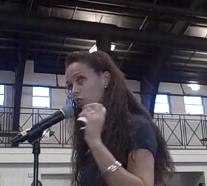
Kindra Arnesen speaking from the August 5, 2010 Buras Town Hall Meeting

Time for your voice to be heard!

Many families in coastal South Alabama depend on a sound coastal environment for their livelihoods. The coastal communities in south Mobile County have been assaulted by the oil catastrophe. Many families are still recovering from Hurricane Katrina and the ongoing oil catastrophe. These proposals provide needed tangible benefits for these communities.

The proposals have emerged from several community brainstorms held in Coden and on Dauphin Island. These proposals are sensitive to community needs and the goals of the Commission. The set of proposals are not meant to be comprehensive but to be included in the comprehensive plan being developed by the Commission.

Ecological Needs 

  • Clean, restore, and enhance gulf and bays
  • Build and enhance 100 miles of oyster reefs and 1000+ acres of coastal marsh and seagrass – see http://100-1000.org/
  • Ensure that water, air, and food are safe with ongoing long-term testing – data should be fully and immediately available to the public
  • Develop comprehensive, fail-safe regulations to prevent future oil catastrophes – prevention is a great deal better than the cure

Coastal Community Participation 

  • Enlist local decision making and employment in coastal recovery efforts
  • Invest in coastal economic opportunities to support sustainable coastal recovery and enhance Alabama’s coastal areas and waters
  • Train south Alabama medical professionals to diagnose and treat environmental health conditions potentially related to the oil catastrophe
  • Immediate public transparency on all issues relating to public health such as the use of dispersants in area waters and the ongoing presence of oil and other health threats in area waters
  • Listen and learn from coastal communities in order to improve future responses to coastal disasters such as oil spills and hurricanes

Education and Support Initiatives for Oil-Affected Families

  • Grant full scholarships for children of low-income, oil-affected families to local universities, community colleges, or technical schools
  • Provide job training and a support system for coastal workers and others who have lost their livelihoods due to the oil catastrophe
  • Enhance science curriculum at all levels (K through college) to better appreciate Alabama’s coastal environment and to provide appropriate service-learning programs to support the environment (see service-learning resource center at the University of South Alabama http://caslce.usouthal.edu/)

 Coastal Fire Protection 

  • Develop a unified, comprehensive plan for coastal fire fighting resources
  • Several coastal communities need multipurpose fire engines with 75-foot ladders and with storage for water and foam
  • Fire and rescue response boat powered by twin engines and capable of pumping water from sea
  • New bunker gear capable of protecting the well-being of the firemen and providing self-contained breathing for firemen
  • Radio communications for hazardous-materials quick response needs that connect Mobile, Baldwin, and neighboring counties in Alabama, Mississippi, and Florida

These proposals will be submitted to the Commission this evening at the Bayou La Batre Community Center. This is a public meeting for the Commission to share its plans and receive input from the public. Meeting starts at 5:30 P.M.
Compassion is Every Breath

With every breath we take, we draw life from the same atoms that have been shared by countless creatures, people, and prophets. We look around and see flowers, sunsets, birds, butterflies, and many wonders. No matter what we have done or not done, good or evil, we benefit from the sun and rain that nourishes the plants and fruits we eat (Matthew 5:44-45). Such is the loving generosity of our Earth and our Creator.
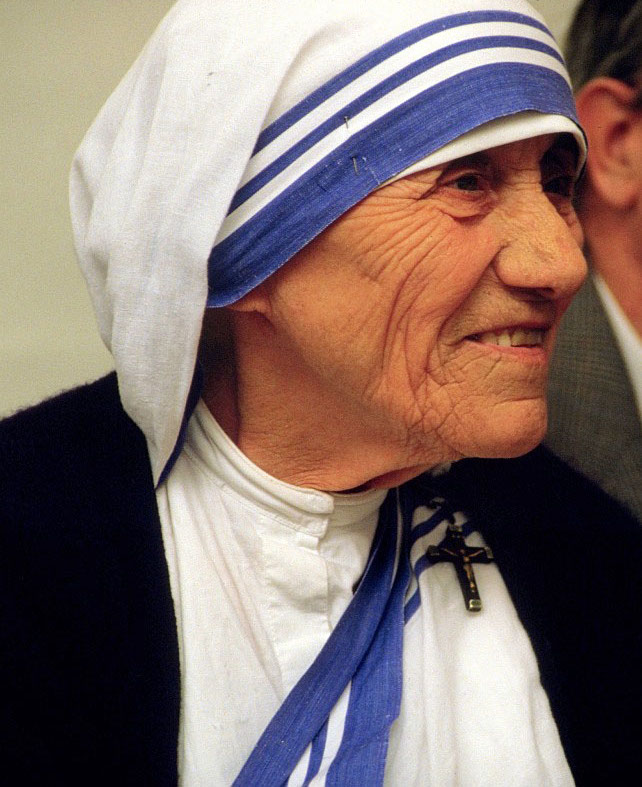
Mother Theresa photographed by Wikimedia-Commons User Túrelio.

"We can do no great things, only small things with great love" - Theresa of Calcutta. Photographed by Wikimedia-Commons User Túrelio on July 13, 1986.

As the Creator’s children, as parts of the Earth, just like the air we breathe, we are called to generously share our gifts so that life might be sustained, that justice might be created, and that peace might be restored. Our sharing, like the Earth’s sharing, must extend to everyone, even to those who ignore us or treat us harshly, just as we have ignored or harshly treated the Earth.

This revolutionary call is not about great individual heroic acts, but about us, plain everyday people, alertly respecting one another, hoping in one another, and acting wisely and generously together. It is the mustard seed growing. It’s believing in the great good of “small things” done “with great love” (Theresa of Calcutta). It’s acting without looking for any credit or reward, “do not even let your left hand know what your right hand is doing” (Matthew 6:2-4). It’s each of us connecting our hearts to the needs around us and joining together so that each small breath and each small act works for the benefit of all.


If you’re interested in Alabama’s coastal communities and in the environment and you’re able to come, we are having a Future of the Gulf – Community Brainstorm this Thursday (October 28) at 6:30 to 8:30 P.M. at the Coastal Response Center at 7385 Highway 188 in Coden, Alabama. If you feel your voice is needed, please come and invite other interested persons, your voice is needed! Snacks will be provided.


Also if you have a minute check out Empower News (see tab above), it is really coming along. Thanks to Dawn McKinney, Rachel Guillory, and Mignon Denton for contributing to this effort regularly.

Future of the Gulf Community Brainstorming

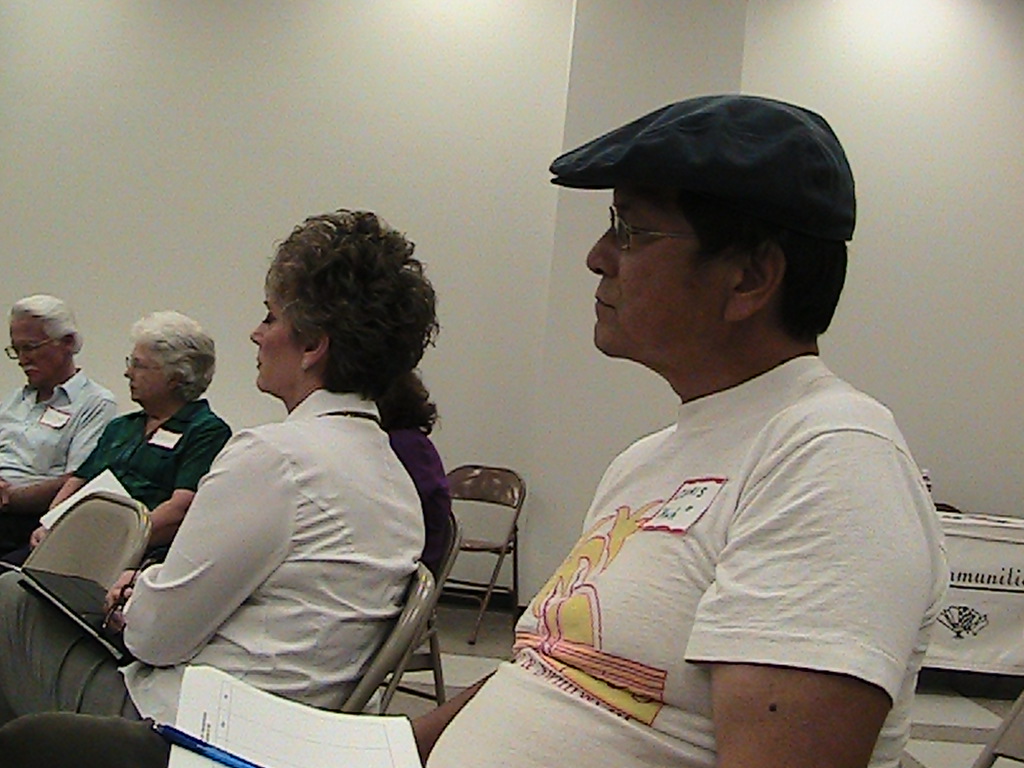
Twenty-five coastal residents – fishermen, artists, nurses, teachers, environmentalists, business persons, scientists, community workers, film makers, researchers, … – brainstormed for two hours at the Coastal Response Center in Coden, Alabama on September 30, 2010. Discussions revolved around the safety of seafood, exposure to toxic dispersants, incidence of area cancer, gulf and marsh ecology, coastal recovery from hurricanes and the gulf oil catastrophe, economic needs, public awareness, political leadership, education at all levels, and truth-trust-and-transparency issues relative to big oil and the government.

The group shared disturbing news about people suffering from exposure to dispersants and oil, the unusual numbers of deep water crabs around shores of Dauphin Island, sightings and collection of oil on Alabama shores during the past two weeks, recent use of dispersants, and numerous coastal people’s needs going unmet (similar to what happened after Hurricane Katrina five years ago).

In the political arena, the group will seek to work with elected officials and those running for office to achieve a clear end to the use of dispersants and gain better representation on governor’s task force for commercial fishermen, seafood businesses, the ship building industry, and the Asian community. Additionally efforts toward the independent testing for seafood will be pursued.

The group will also work to inform the public in brief easy-to-understand materials about the dangers of dispersant use and the ongoing effects of the gulf oil catastrophe. Participants discussed the importance of supporting businesses in coastal communities, helping the needy, and providing high quality educational experiences and service opportunities for the youth. Participants also encouraged one another to serve the community practically and positively in whatever opportunities can be found.

If you would like to help in any of these endeavors, please contact me at denton2100@gmail.com or 251-861-4012 or plug in with local groups and local environmental groups. Our next Future of the Gulf – Community Brainstorm will be held on October 28 at 6:30 P.M. at Coden’s Coastal Response Center which belongs to the South Bay Communities Alliance.

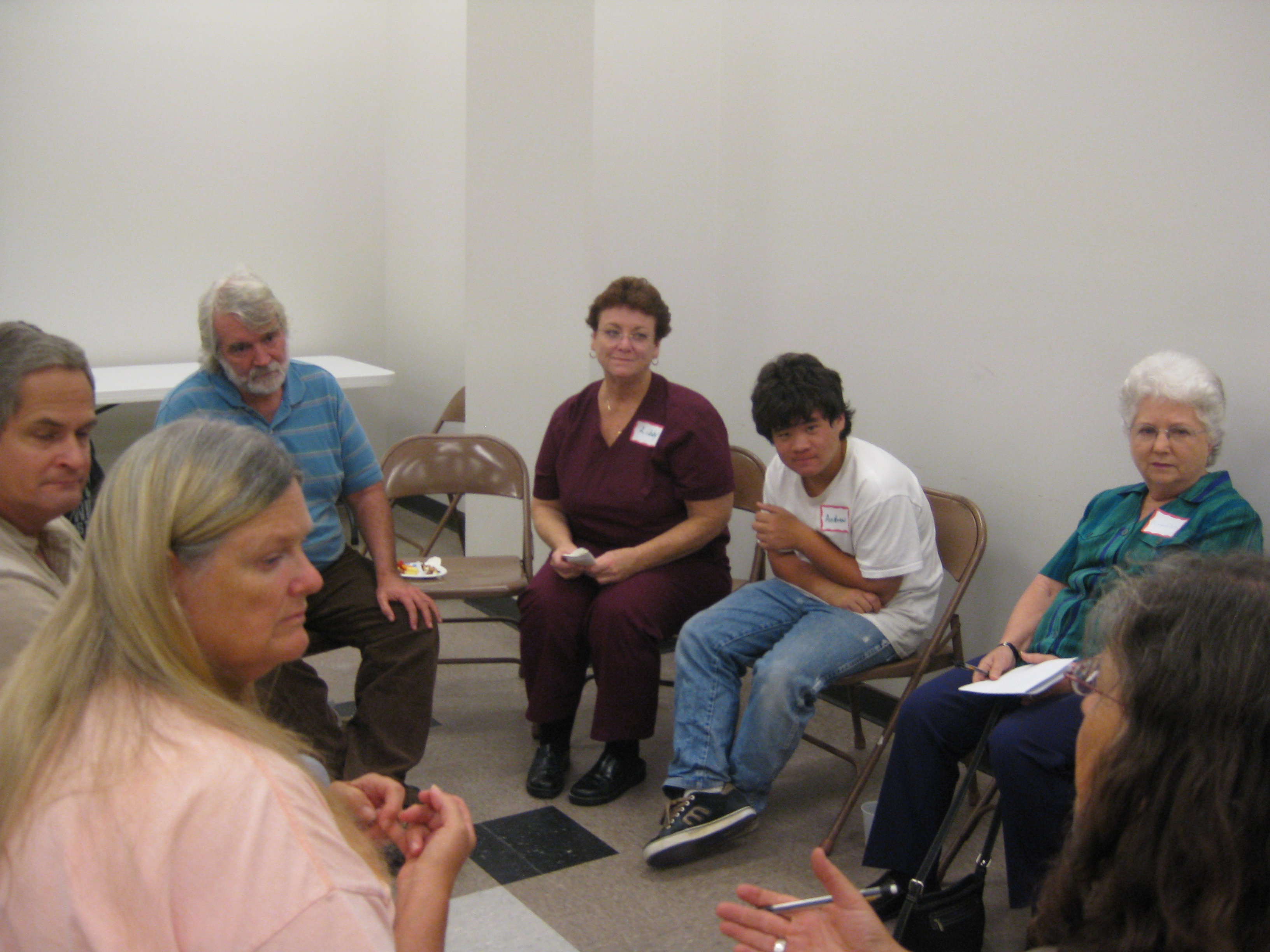
Discussions happened in both the full group and small groups

Discussions happened in both the full group and small groups, photographed by Dawn McKinney, September 30, 2010

Each person was given the full attention of the group

Each person was given the full attention of the group, photographed by Sheila Hagler, September 30, 2010.

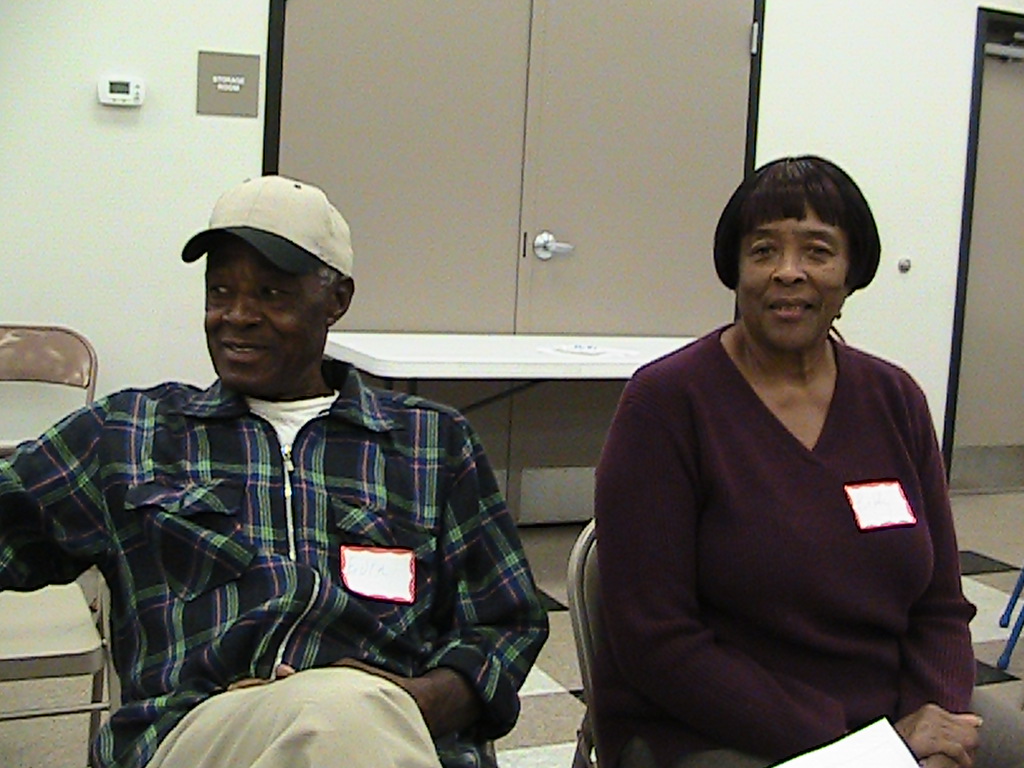
Ervin and Betty Royal of Coden and South Bay Community Alliance

Ervin and Betty Royal of Coden and South Bay Community Alliance, photographed by Sheila Hagler, September 30, 2010.

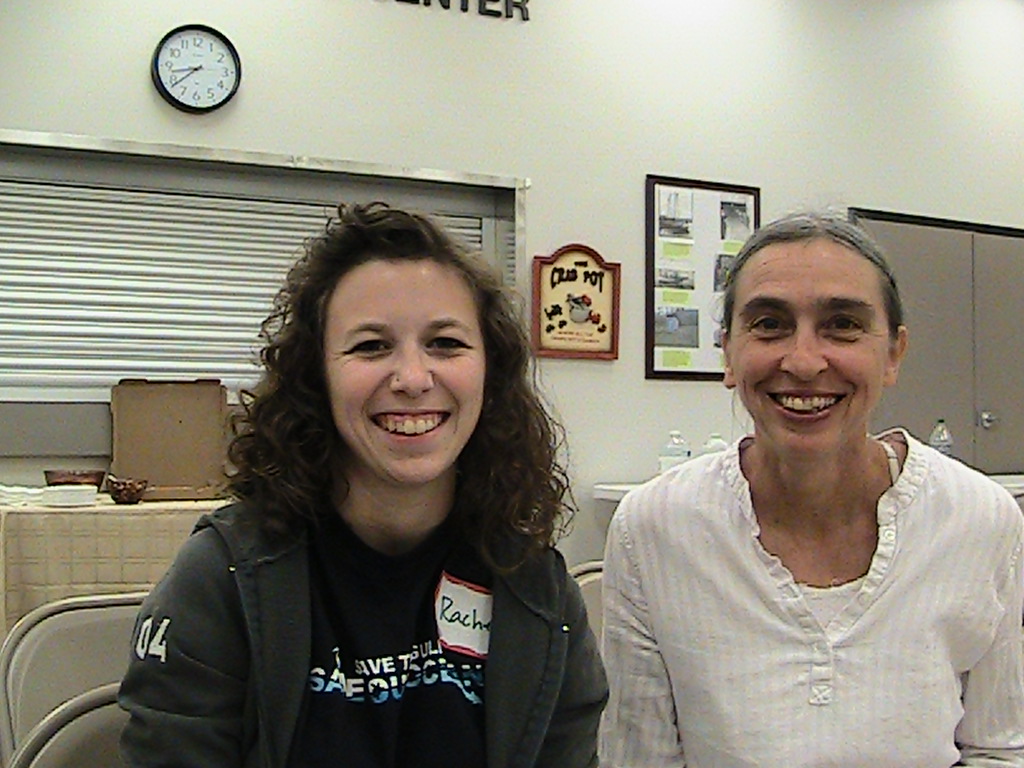
Rachel Guillory of Oceana and my wife, Rosie Denton

Rachel Guillory of Oceana and my wife, Rosie Denton, photographed by Sheila Hagler, September 30, 2010.

Fellow Explorers

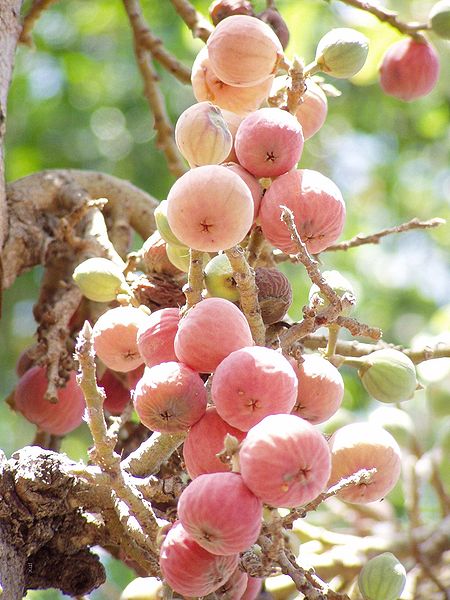
The fruit of the sycamore tree

The fruit of the sycamore tree, photographed by Eitan f, a Wikimedia contributor, July 8, 2006.


In his life, as Jesus journeyed from place to place, diverse persons would ask him what it would be like if they followed him. Often Jesus would just say, “Come and see.” The roadmap was that unclear. Trust was paramount.

Trusting in the Spirit, Jesus strongly encourages each of us to positively and energetically use our talents and resources, to let our lights shine, and to pull together in communion. One day while Jesus was spreading this message, the Spirit inspired Zaccheaus to climb a sycamore tree to get a better look at Jesus. Zaccheaus was a hated tax collector, and he was literally out on a limb with that day’s crowd. Probably some of them expected or feared that Jesus would invite Zaccheaus to the synagogue for the upcoming Sabbath. But Jesus, like Zaccheaus, was intent on exploring new horizons, and so he called out, “Zacchaeus, come down quickly, for today I must stay at your house.” Jesus’ journey to Zaccheaus’ home and Jesus’ communion with Zaccheaus brought scandal, but Zaccheaus had climbed above life’s challenges, trusted in the new perspective, and boldly changed his life.


Thursday evening, September 30, 7:00 P.M., is the Future of the Gulf – Community Brainstorm. It’s at the Coastal Response Center – 7385 Highway 188 in Coden, Alabama.